
计算起飞性能时,如果同一时间同一报文或者不同资料中的“跑道污染物类型+深度”和“RWYCC”不一致的情况下,需要按照“降级”处理。如果 Flysmart 中有“跑道污染物类型+深度”和“RWYCC”双输入,那么需要在 RWYCC 中选择相应的数值,而不是选择“NONE”。
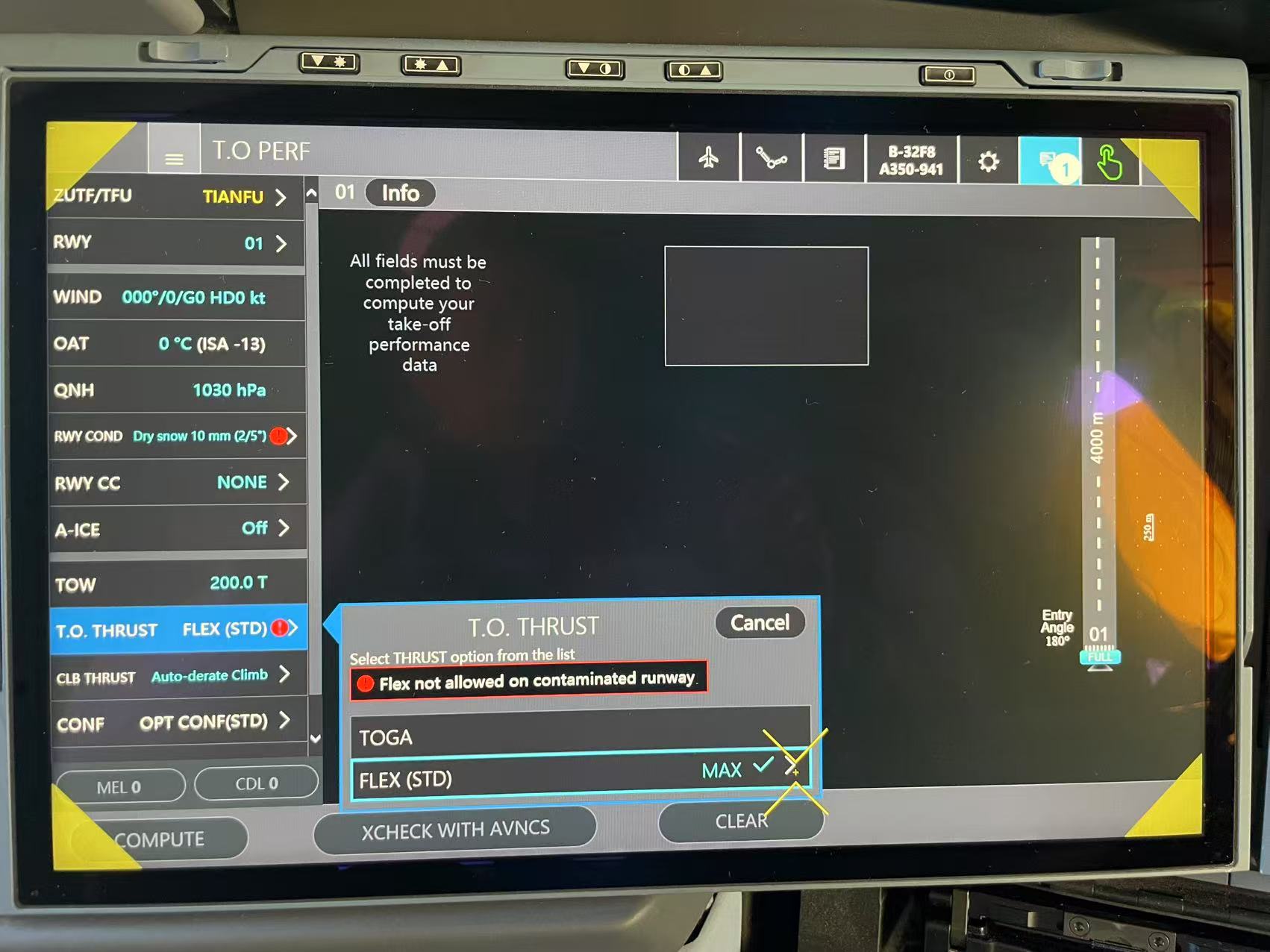
但有一个奇怪的情况,如果跑道条件(RWY COND)为湿(Wet),并且存在降级情况(即使降到 1-Poor)时,就算在 RWYCC 输入降级后的数值,计算结果仍然可以使用 FLEX。但这种情况如果视为污染跑道,不是应该只能 TOGA 么?
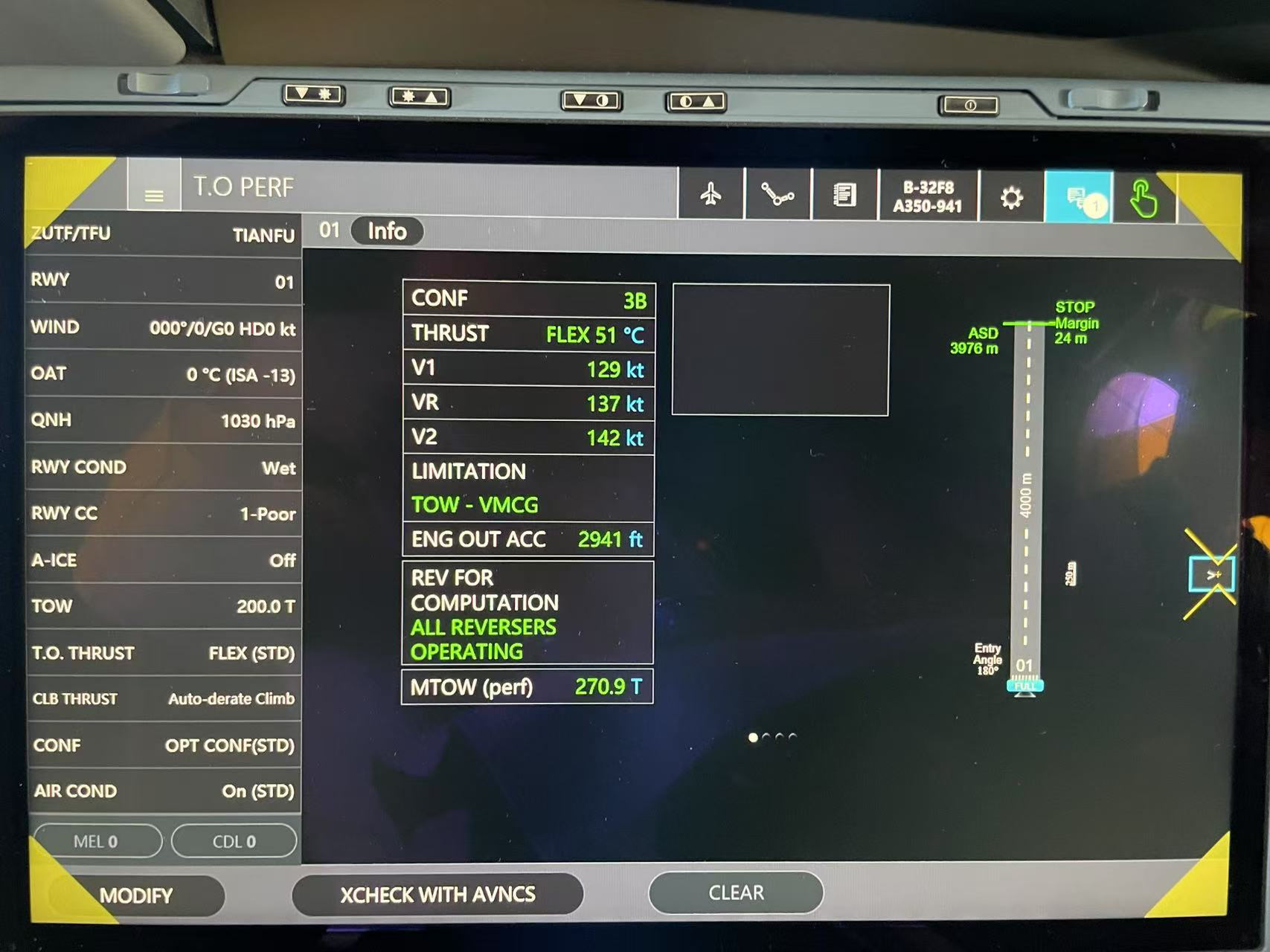
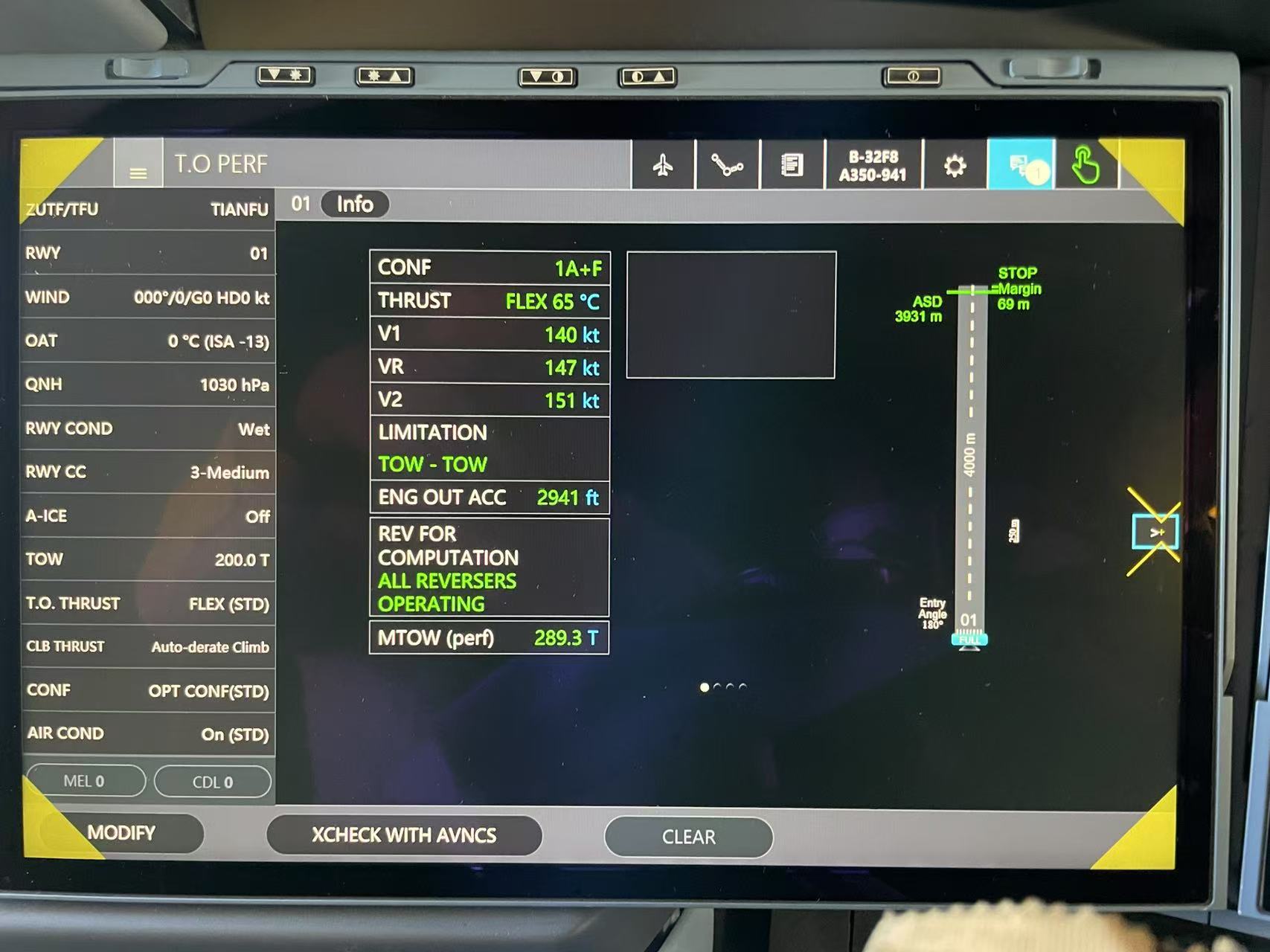
从下面几张图中的计算结果中可以看出,“RWY COND WET + RWYCC 3 + TOGA” 和 “RWY COND Dry snow 10mm + RWYCC NONE + TOGA” 的性能几乎相同。而如果使用 “RWY COND WET + RWYCC 3 + FLEX”,速度会高得多,且停止余度仅为 69 米。
这意味着在这种降级情况下,使用 TOGA 才能获得合理的性能。如果按照 Flysmart 降级算出来的 FLEX,裕度非常小。这也与法规要求“污染跑道必须使用 TOGA 起飞”一致。
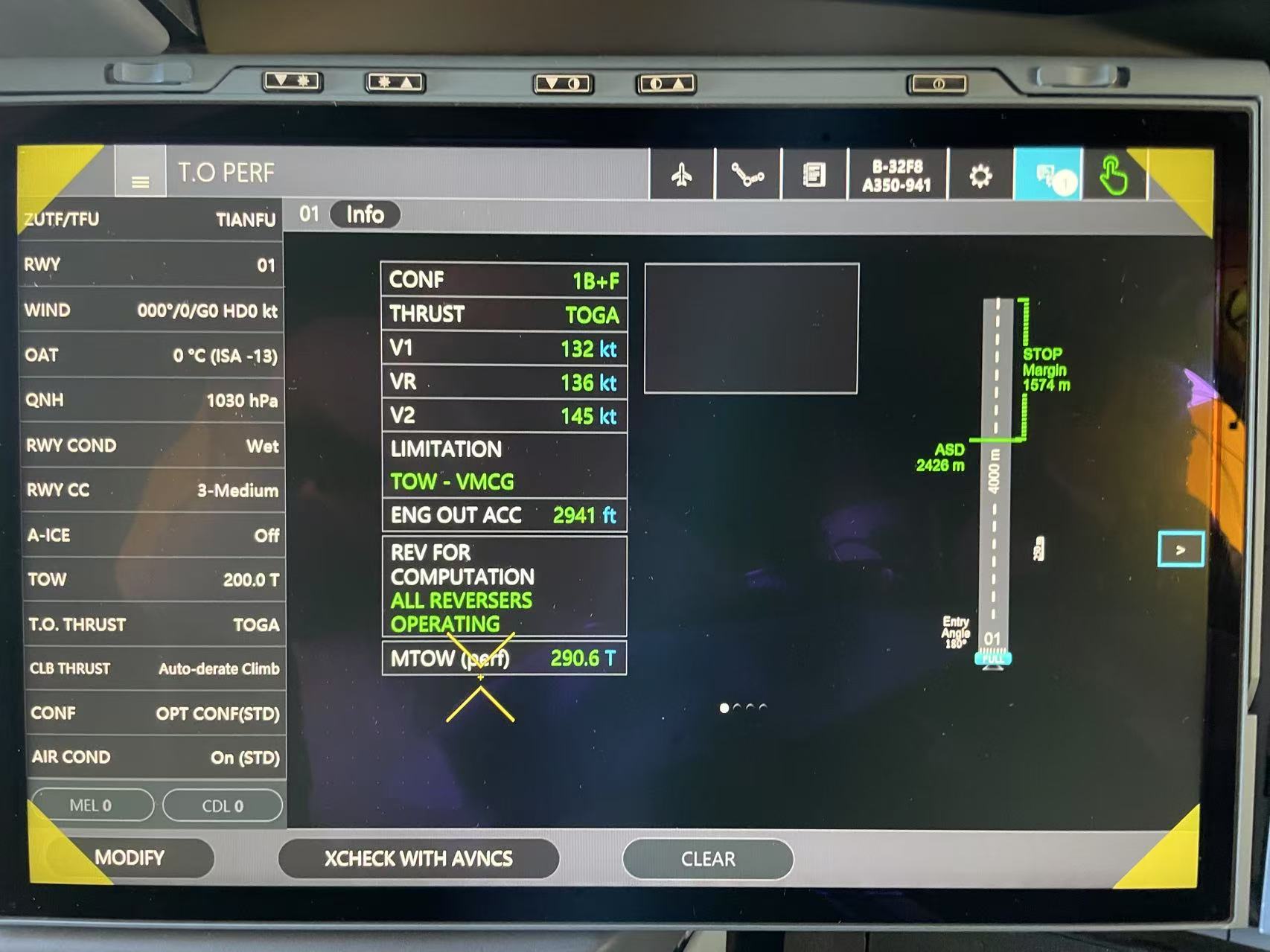
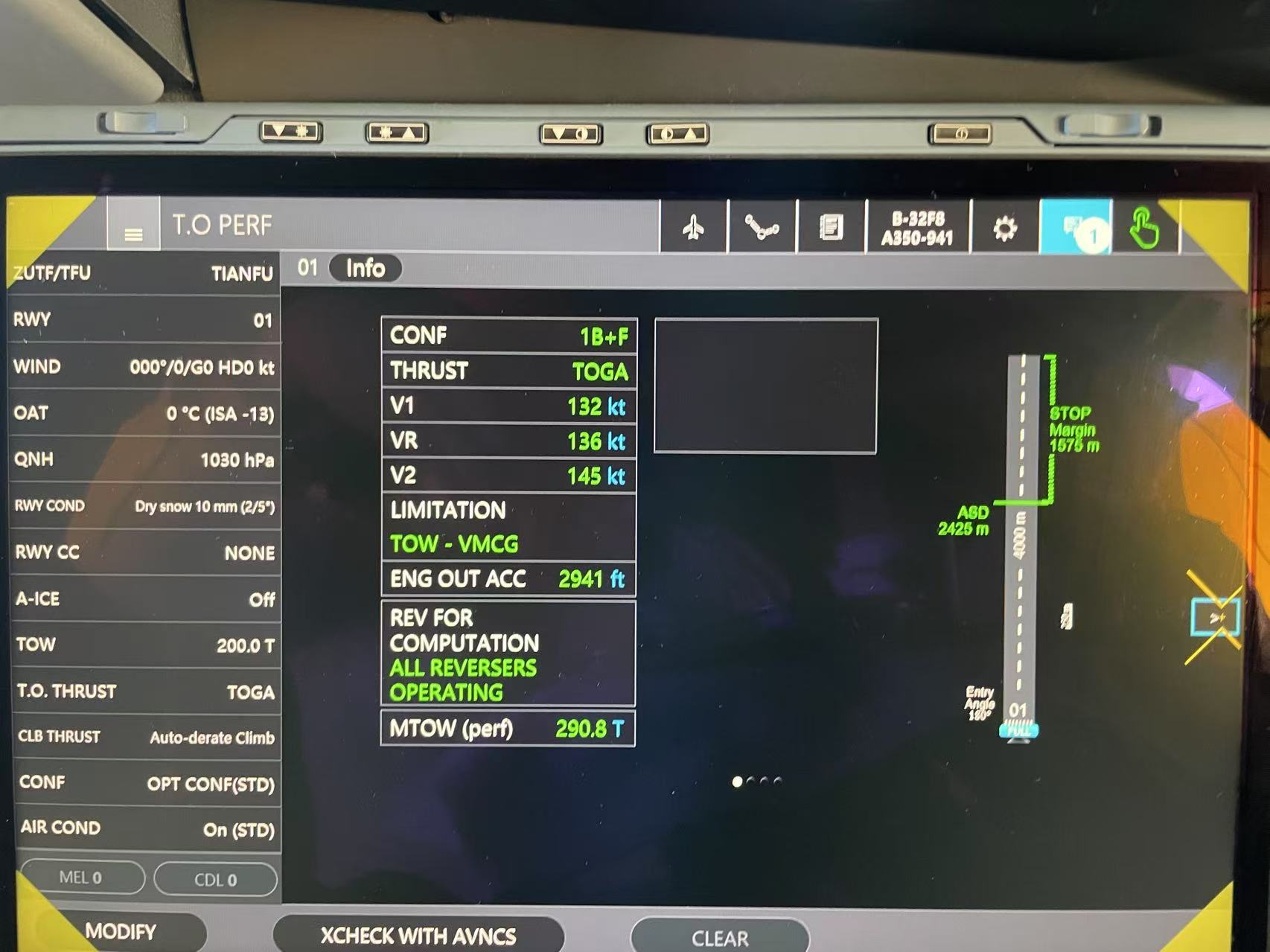
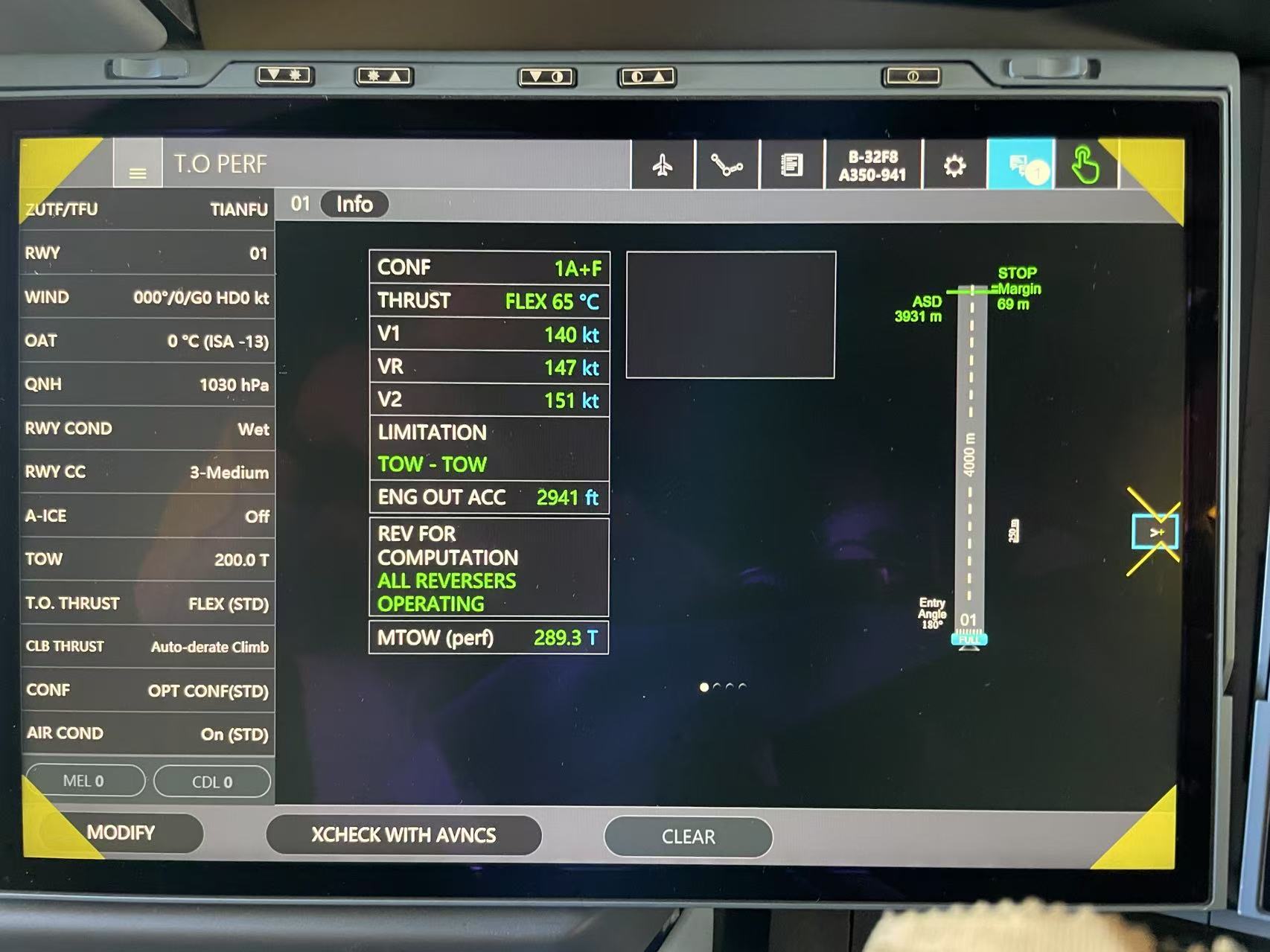
对于这个问题,空客的解释是:
在性能工具(Flysmart + 起飞)中引入跑道条件代码(RWYCC)的目的,是为了在起飞性能计算中纳入 RWYCC 的考量。
在运行中,性能工具会考虑这个新输入,但其必须仍然符合适航认证要求。目前,在适航认证层面,跑道状态(Runway State)仍然是性能计算的唯一依据。
Flysmart + 必须遵守适航认证要求。这就是为什么 Flysmart + 的限制是基于跑道状态来设定的。如果跑道状态允许使用灵活温度(Flex Temperature),那么通过 RWYCC 进行的降级并不会限制 FLEX 的使用。 限制的最终责任仍由飞行机组承担。
说人话就是,空客想把 RWYCC 纳入起飞性能考量,作为一个辅助的因素,尤其是降级的计算。但是由于法规要求起飞性能只能使用跑道状态,也就是“跑道污染物类型+深度”来计算(RWYCC 是着陆性能计算使用的),所以 Flysmart 计算起飞性能时并不会因为 RWYCC 而改变推力的选择。
所以这个事情就显得很拧巴,最后就变成了一个坑,需要机组自己去避开,有点扯淡了。
原文
Q1
When there’s downgradetion in T.O PERF computation, if dual input is available, the T.O. THRUST can be FLEX. However, if the equivalent runway condition is input, only TOGA can be selected, because of FLEX takeoff is not permitted on contaminated runways.
Is it a bug for T.O PERF app?
A1
Apologize for the delay of the answer. The thrust option in Flysmart+ takeoff modules is based on the runway state. Takeoff on a contaminated runway does not permit the use of FLEX. Therefore, Flysmart+ only provides TOGA as a thrust selection when the RWY COND input is contaminated runway. When the RWY COND is Dry or Wet, any downgrade using RWYCC does not restrict the use of FLEX.
In the example that CSC provides, the RWY COND is Dry Snow 10 mm, therefore takeoff using FLEX is not permitted.
Q2
I agree with you about only TOGA when takeoff on a contaminated runway. My point is when RWY OCND is wet and there is a downgraded situation (even to 1-Poor), why can Flysmart still use FLEX? Should it be considered as contaminated runway? I think it is more reasonable to do so.
Through the pics in attachment, you can see the performance are almost the same between “RWY COND WET + RWYCC 3 + TOGA” and “RWY COND Dry snow 10mm + REYCC NONE + TOGA”. And if “RWY COND WET + RWYCC 3 + FLEX”, the speed are much higher and stop margin only 69m. That means in such downgraded situation, use TOGA can get the reasonable performance.
A2
The aim of the introduction of the runway condition codes (RWYCC) in the performance tools (Flysmart+ takeoff) is to provide a way to consider the RWYCC in the takeoff performance.
Operationally, the performance tools take into account this new input but it must remain compliant with the certification requirements. Currently for the certification, the runway state remains the only input for the performance computations.
Flysmart+ must comply with the certification requirements. It is the reason that the limitations in Flysmart+ are taken into account based on the runway state. If the runway state permits to use flexible temperature, the downgrade via a RWYCC will not limit the use of the Flex. This limitation remains under flight crew responsibility.
